
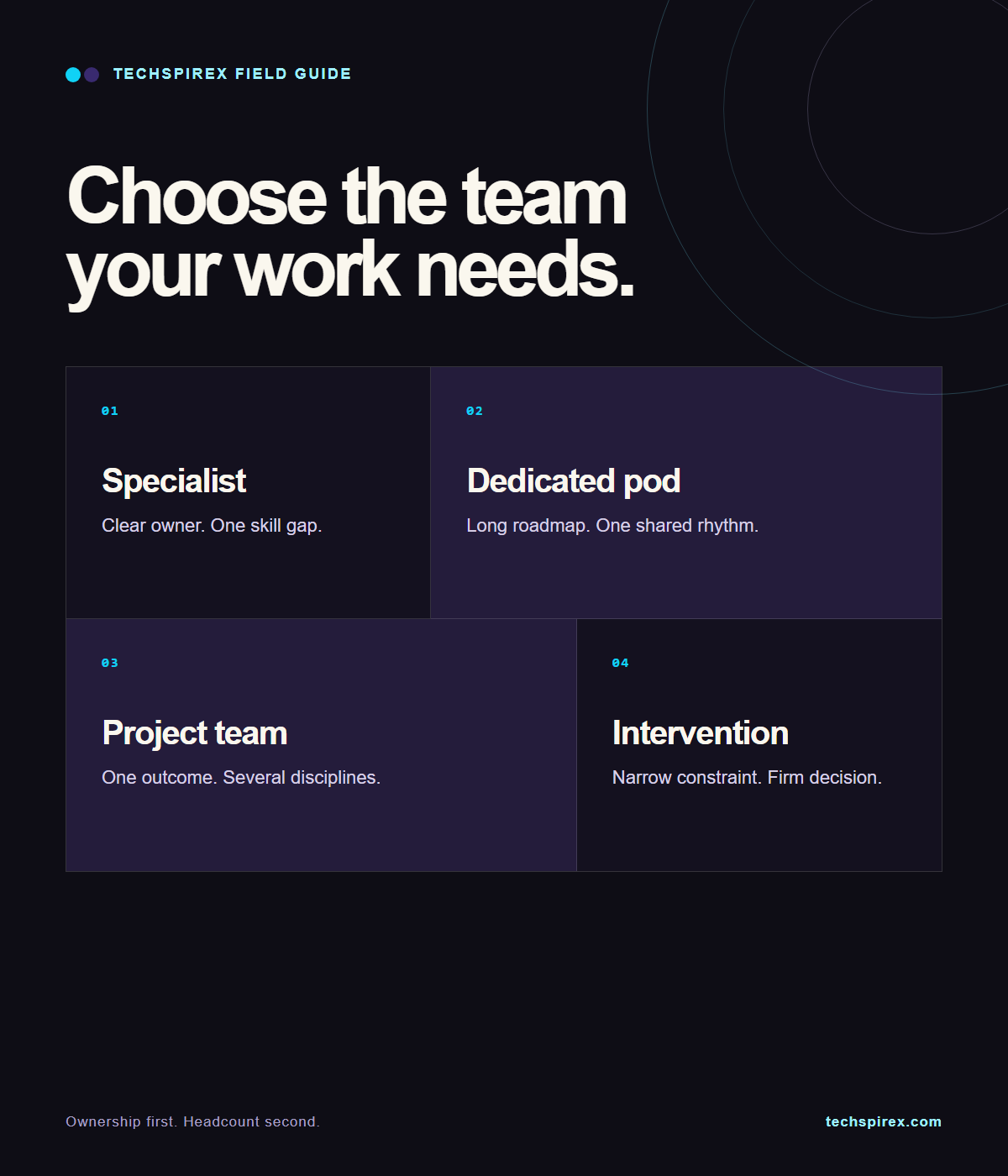
01Clear ownership / defined gap
One specialist
The work is understood. Your product owner sets the pace. One missing skill holds the line.
Engineering-led delivery - Lahore to the world
One accountable team takes the work from product decisions to tested software and an owned handoff. Bring one constraint or the whole build.
Global delivery - US / UK / EU overlap
Proof you can open
Start with a live SaaS product. Then open the product labs and test the details yourself. No moodboard standing in for delivery.
Shipped product · Live
A LinkedIn authority & career-visibility OS
A real SaaS product we designed and engineered end to end for its founder - AI-assisted LinkedIn, content, and resume tooling that aligns one credible professional story, without fabricating accomplishments.
Built for Fizza M., Founder - byQalam
Concept builds · self-initiated, not client results
SaaS analytics
Interactive subscription analytics with period switching, cohort retention, and hand-built data visualisation.
02AI automation
A support triage console built around confidence, escalation boundaries, editable drafts, and human control.
03Ecommerce
A complete storefront flow with filtering, a stateful cart, transparent order math, and checkout.
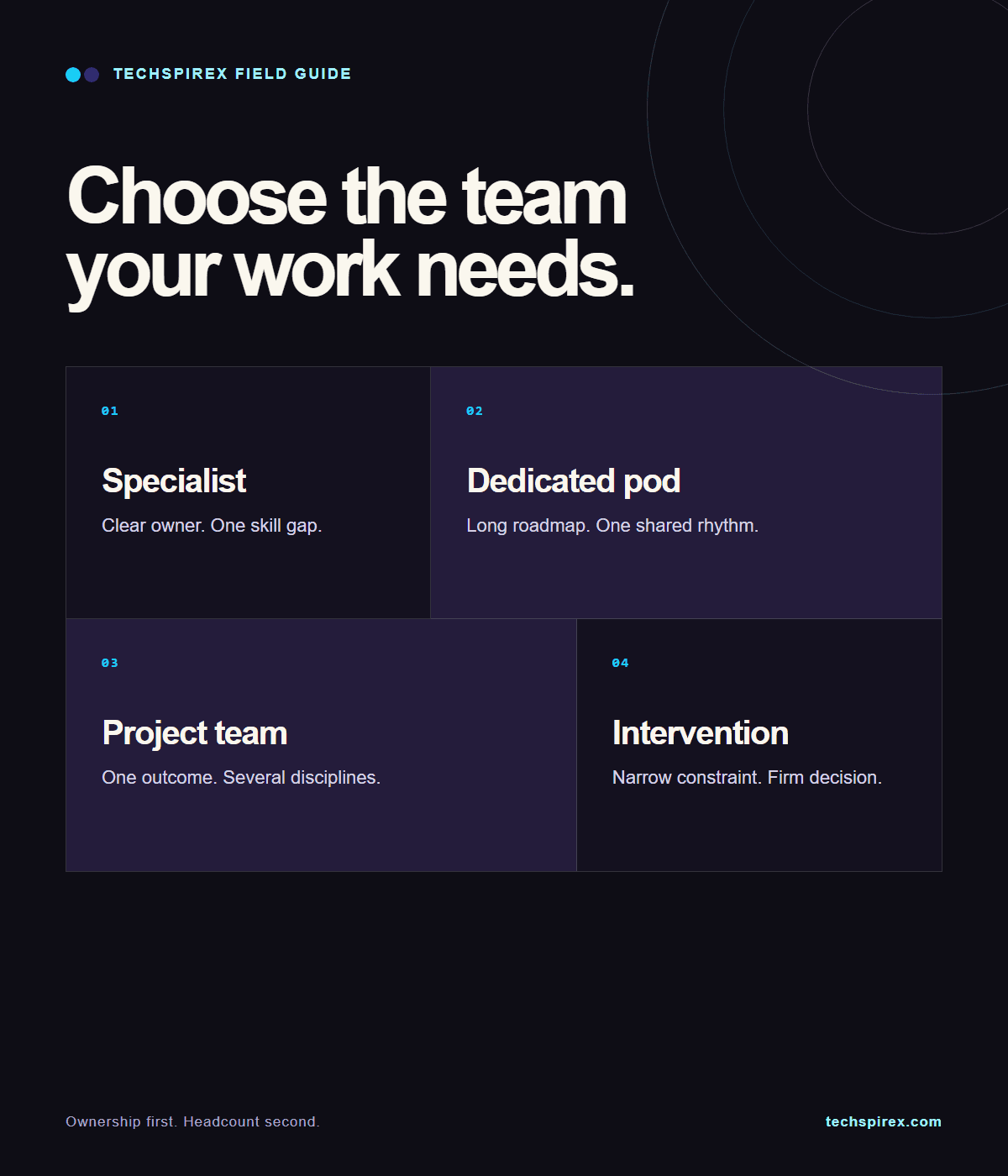 your work can carry.
Headcount is the last decision. Start with ownership, uncertainty, and the shape of the outcome.
The work is understood. Your product owner sets the pace. One missing skill holds the line.
The roadmap will run for months. Design, engineering, QA, and delivery need one memory.
The outcome is clear. The path crosses disciplines and needs one accountable plan.
The constraint is narrow: a release rescue, performance fault, redesign, audit, or migration decision.
The evidence packet
No theatre, mystery status, or invented result. The work stays inspectable from the first decision to the final handoff.
Concept work is labelled. Simulated data is labelled. Commercial outcomes are claimed only when attributable and approved.
Scope, risks, dependencies, release order
The hard choices are written down before they become expensive code.
Working software, acceptance checks, next release
You inspect the product while it is being built, not after the budget is gone.
Source, deployment, operating notes, constraints
The system leaves ready for its next team, without a hidden dependency on ours.
One specialist, a stable pod, or a complete product team. The structure follows the constraint.
Capabilities
Bring us a full product, one difficult workstream, or a capacity gap. We shape the team around the result you need.
Explore all servicesDiscovery, design, software engineering, QA, cloud, launch, and ongoing improvement with one accountable delivery team.
Reduce repeatable operational work with clear human checkpoints.
03Make complex workflows understandable, usable, and conversion-aware.
04Create a deployment path your team can run and troubleshoot.
05Align acquisition pages, message, measurement, and iteration.
06Remove friction across catalog, cart, checkout, and operations.
07Add a named specialist or dedicated pod without waiting through a full hiring cycle.
Ready when you are
Tell us what is blocking the business. We'll help define whether the right answer is a product build, a smaller intervention, or no build at all.
We value your privacy
We use analytics cookies only if you allow it, to understand how the site is used. No cookies are set until you choose. See our privacy policy.